Theology, Scripture, and Movements
that SHAPE OUR WORK

“For as the bread, which is produced from the earth, when it receives the invocation of God, is no longer common bread, but the Eucharist, consisting of two realities, earthly and heavenly; so also our bodies, when they receive the Eucharist, are no longer corruptible, having the hope of the resurrection to eternity.”
St. Ireneaus, 1st century CE
God is a Gardener
Genesis 2:8 – “And the Lord God planted a garden in Eden, in the east; and there they put the human whom they had formed.”
Food is a Gift of the Incarnation
Deuteronomy 8:10 – “When you have eaten your fill, give thanks to the Lord your God for the good land that they have given you.”

Breaking Bread at Emmaus by Andrew Smith
The Road to Emmaus
Luke 24:13-35
It is not until the disciples experience the breaking of the bread and the sharing of the meal that they recognize the person traveling with them as Jesus, the Risen Christ. This story reveals to us the glory of God is something we "taste and see." It is through the experience or invocation of the sacred in a meal that we come to know and witness Jesus in our midst.
Pentecost
Acts 2:1-13
People from around the world, representing multiple cultures, gather together, working across differences. They eat, share in daily life, and learn each other's languages, seemingly living harmoniously despite their cultural diversity. The Holy Spirit descends on all the people and they can understand each other despite speaking different languages. A vision of the world that Christ's love and unity would bring into being.
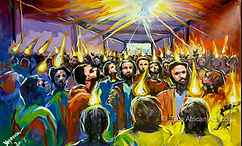
Pentecost Light by Evans Yegonizer Yegon

Food sovereignty is the right of peoples to define their own food systems, ensuring access to healthy, culturally appropriate food produced sustainably, with communities controlling production, distribution, and consumption, shifting power from corporations to local producers and consumers for resilience, equity, and ecological health. I assert that it is these very principles outlined by the global majority of land laborers and stewards, many of which are Indigenous populations, that provide insight into what a lifestyle centering the Eucharist looks like when lived out through the lens of liberation and healing.
Food Sovereignty Movement Outlines Principles of the Eucharist

Sarvodaya Shramadana Movement Models Sacred Economics
Sarvodaya Shramadana means the awakening of all through the gifts of shared labor. This alternative economic movement in Sri Lanka that started in the 1950's models how to use the cultural context of a place to positively encourage a new economic model to emerge through the marriage of spiritually rooted economic reform.

Dorothy Day and Peter Maurin's movement that began in the 1930's is a model for social justice movements that are rooted in the scripture and lineage of the Roman Catholic Church who take inspiration from the lives of the saints to live embody the mercy and justice of Jesus Christ.